Monday, April 2, 2018

Tourists fill Aurora Ecozone summer fest

Tourists came in droves to Aurora this Holy Week to witness the grand opening and the different sports, musical, art, dance, and other environmental, entrepreneurship, and religious activities included in the 2nd Summer Festival in the Aurora Pacific Economic Zone and Freeport Authority.
The weeklong celebration was anchored on the theme “Tulung-tulong sa pagsulong: Kabuhayan, Kaunlaran, Kapayapaan.”
The event highlights the Aurora Economic Zone as a leading partner of the Provincial government in terms of preserving Aurora’s cultural ingenuity and history, environment and natural resources. 
It also serves as a tool for economic progress by improving the tourism aspect and all areas of possible investments spearheaded by the APECO.
The Grand Opening Ceremony on March 26 was graced by distinguished guests from national and local governments, NGOs and guests from the private sector.
Among those who attended was the Department of Tourism’s Spokesperson, Assistant Secretary Frederick Alegre, who had committed the DOT’s support for the Aurora Ecozone. 
Visitors gather at the beach area of the Aurora Ecozone to witness the grand opening and the different activities of the Ecozone’s 2nd Summerfest.  The weeklong festivities included strongman sports, water sports, tribal games, music festival and dance contest, fireworks, tree planting, lantern lighting, artwork seminar, poster making contest, film showing, medical mission and gift giving for the poor, entrepreneurship training, youth camp, and interfaith praise and worship.

He said that the five-day festivity which offers business opportunities, training programs, sports, beauty, arts, dance and other competitions, health and wellness and many other interesting activities will prove to be memorable for the residents and their guests. 
While remaining positive that the government will overcome the Boracay problem, he said that “for tourism to really work, we must be responsible caretakers of the community resources and to be fun yet responsible hosts to our visitors.” 
He noted that the clean and beautiful beaches in the province, the historic places in Baler and the promising tourism sites in San Ildefonso Peninsula “are more than enough to promote the province of Aurora.” 
Alegre added that the churches in the area, especially the most-visited Ermita Church, will encourage faith tourism.
 Another guest, Undersecretary Emily Padilla of the Department of Agrarian Reform spoke on how federalism will work in Aurora.  
Noting that APECO is the only ecozone facing the Pacific Ocean, she said “with the problems that we have concerning the West Philippine Sea, we can go back to the original route used by the Acapulco and the Galleon Trade to spur economic activities in the eastern seaboard.”
“We need APECO as we need to build 200 economic hubs in the country,” Padilla said.
She stressed the strong support of President Rodrigo Roa Duterte and the Department of Agrarian Reform for the Aurora Ecozone. 
Department of Social Welfare and Development Undersecretary Virginia Orogo, who also attended the event, said that APECO is the hope of economic progress in Aurora.  
She stated that DSWD targets to lower poverty rate in the country by at least 14% and one way to do this is to help the country attain peace by eradicating people’s rebellion caused by poverty. 
“The theme Tulong-tulong sa pagsulong: Kabuhayan, Kaunlaran at Kapayapaan is very timely and aptly put together. Aurora is now accessible by land, sea and air.  Our natural resources are vast, and we need to involve everybody in preserving and nurturing what we have,” she said.
“Invite investors as there are lots of opportunities in this province. DSWD has sustainable livelihood programs that Aurora can avail of.  The Duterte administration’s thrust is geared towards what APECO wants to become,” Orogo concluded. 

APECO potential for tourism, economic opportunities cited

By Hannah Torregoza
Government officials have expressed optimism on the potential of the Aurora Pacific Economic Zone and Freeport Authority (APECO) to rake in more tourists and spur economic opportunities in the province.
APECO wrapped up its week-long second summer festival, marked by musical, art, dance, sports and religious activities, this Holy Week.
The event highlighted APECO as a leading partner of the Aurora Provincial Government in preserving the province’s cultural ingenuity and history, environment and natural resources.
APECO was established by virtue of Republic Act No. 9490, or the Aurora Special Economic Zone Act of 2007, which were pushed by former Senator Edgardo J. Angara and his son, then Aurora Representative and now Senator Juan Edgardo (Sonny) Angara.
While government officials are positive that the problem in Boracay Island would be resolved soon, the Department of Tourism (DOT) officials said they are now undertaking measures to ensure that the Aurora’s clean and beautiful beaches would remain the same despite the influx of tourists, both local and foreign.
“For tourism to really work, we must be responsible caretakers of the community resources and to be fun, yet responsible hosts to our visitors,” DOT Spokesperson, Assistant Secretary Frederick Alegre said during the opening ceremony last March 26.
Apart from the beaches, the Aurora Province is also keen on the promoting more of its tourism sites particularly the San Ildefonso Peninsula, and the most-visited Ermita Church.
Department of Agrarian Undersecretary Emily Padilla, on the other hand, expressed confidence that the Duterte-government’s federalism advocacy would work in Aurora, noting how APECO is the only ecozone facing the Pacific Ocean.
“With the problems that we have concerning the West Philippine Sea, we can go back to the original route used by the Acapulco and the Galleon Trade to spur economic activities in the eastern seaboard,” Padilla said.
Padilla also said APECO has the strong support of President Duterte and the DAR which believe that the place can pave way for the creation of 200 economic hubs in the country.
Presidential Communications and Operations Office (PCOO) Undersecretary Joel Egco, who also cited APECO as “one good news” as it starts to take off and effect the change for the development of Aurora “whose potentials have impact on the national economy.”

Wednesday, October 29, 2014

APECO TO BOOST AURORA TOURISM

Written by Mamer Bañez
BALER, Aurora -- The creation of the Aurora Pacific Ecozone and Freeport Authority (APECO) in Casiguran, Aurora, is seen to spur local economy in the eastern seaboard of Luzon.
     
Gerardo Erquiza, president and chief executive officer of APECO, on Tuesday lamented that the Aurora province has been increasingly isolated and neglected over the past few decades.
     
“Tourism is expected to be boosted as tourist influx to Baler has dramatically risen. Casiguran has much more to offer than Baler in terms of tourist spots and hotel owners in Baler are keen on putting up hotel facilities in Casiguran to respond to the call,” said Erquiza.
     
Travel time between Casiguran and Baler was also shortened due to APECO’s Baler-Casiguran Road project, Erquiza added.
     
The official was present during the Senate hearing on the proposed 2015 budget of the APECO. Its proposed budget amounts to P250 million.
     
While he welcomes a number of criticisms regarding APECO, Erquiza appealed for the support of its stakeholders.
     
Erquiza said they have always been open for “greater consultation and collaboration,” especially with people of Casiguran.
     
“What we need now is breathing space, not a choking point. Let’s not kill the ideas and visions that APECO has for the eastern seaboard of the Philippines,” he stressed.
     
During the hearing, Erquiza also dismissed reports that APECO destroyed the lives and resources of Casiguran farmers.
     
Renato Prado, chairman of Samahang AKDA ng Aurora, in a press conference at the Senate December last year, debunked land-grabbing claims against APECO.
     
“Wala pong katotohanan. Wala pong inaalis ang APECO na Dumagat. Sa totoo lang po, sila po ’yung nakatulong sa amin, binigyan po kami ng kabuhayan,” said Prado.
     
Ely Dipablo, a Dumagat elder and former officer of Presidential Aim for National Minorities in Casiguran, echoed Prado’s statement.
     
“Hamunin ko po. Magsabi sila ng kahit na isang pangalan na inagawan ng lupa ng APECO. Hinahamon ko po sila ilabas nila kahit isa lang tao kung sino ang inagawan. Walang inagawan ng lupa,” he said.

Source: http://www.journal.com.ph/index.php/news/provincial/apeco-to-boost-aurora-tourism

Thursday, April 25, 2013

Bamboo project to hire 2,000 employees

By Manila Standard Today | Posted on Apr. 22, 2013 at 12:01am

The Aurora Pacific Economic Zone and Freeport Authority will hire some 2,000 workers for the planting and harvesting of bamboo to meet the needs of a foreign investor in Casiguran.
Apeco president Malcolm Sarmiento Jr. said the locator, Futenco, was occupying  a 200-hectare site to include a plantation and production facilities.
Sarmiento said the project is backed by the Department of Environment and Natural Resources and the Department of Science and  Technology.
“It will provide jobs and livelihood opportunities not just to residents of Casiguran but also to adjoining communities,” he said.
Futenco will produce bamboo chips for biomass plants and bamboo cotton for garments along with furniture.
“Among those who will benefit from this are the Dumagats in the San Ildefonso peninsula,” Sarmiento said, adding that they can use their own land for the cultivation of bamboo needed by Futenco.
He said no Dumagat will be displaced because Apeco has committed to help them secure their Certificate of  Ancestral Domain Title with free legal assistance “The Dumagats are being given priority in all Apeco projects,” Sarmiento said.
He said seaweed farmers in the ecozone have made a harvest from the initial 3-hectare seaweed farm of 16 families in Casiguran for reseeding to expand production to cover 100 hectares to benefit 400 households.

Wednesday, February 20, 2013

Taiwan, Norway firms to locate in Aurora ecozone

By Ferdie G. Domingo


Two foreign locators are lining up P15-million worth of investments at the Aurora Pacific Special Economic Zone in fish processing, papaya plantation, bluefin tuna and in the production of eel, the first large-scale commercial culture of its kind in the country.
Malcolm Sarmiento, Apeco president and chief executive, said Nantsan of Taiwan and Pro Feeds Inc. of Norway have filed applications to do business at the 1,000-hectare zone in Casiguran with its own pier and airport to support agro-industries, mariculture and eco-tourism.
Sarmiento said Nantsan wanted to put up sea cages for raising grouper species, plant papaya at a 10-hectare site and produce and process eel, a freshwater variety.
He said Pro feeds planned to culture bluefin tuna inside Casiguran Sound which had the viable  26 degrees Centigrade for raising the fish.
Bluefin is a premium variety, Santiago said, noting that recently a 200-kilo bluefin fetched $1.7 million (roughly P85 million) at the Chukiji fishport in Tokyo during an auction.
The Philippines is seventh among the world’s top tuna producers with exports of frozen and canned tuna reaching $284.254 million in 2011, according to the Board of Investments.
Sarmiento said the investors favored Aurora because it was “among the few provinces in the country that is still rich in natural resources.”
Sen. Edgardo Angara, who authored the law that created Apeco said the ecozone is the country’s premier gateway to the Pacific.
“Its accessibility to Manila and to other logistic and investment hubs in Luzon via land and air makes it an ideal starting point for the inflow of commerce,” he said.

Thursday, November 29, 2012

APECO to build training center for Dumagats

Written by : 


BALER, Aurora -- The Aurora Pacific Economic Zone (APECO) will soon construct a training center for tribal Dumagats inside the compound of economic zone in Casiguran town in honor of a Dumagat tribesman who was shot dead by illegal loggers last September.  

Apeco Deputy Administrator Kent Avestruz said the training hub dubbed “Teming Moral Dumagat Training Center” was launched during the ground-breaking ceremony at a 220-square meter site at the ecozone last Thursday. It was named after Artemio “Teming” Moral who was gunned down at around 7:30 p.m. last Sept. 14 by a lone gunman in Sitio Dipontian, Bgy. Cozo.

Avestruz said Moral, a “Bantay-Gubat” member of APECO, was shot by unidentified gunman while having dinner with his wife Loida. He died on the spot while his wife was wounded. 

Sen. Edgardo J .Angara led the ground breaking rites for the training center. He paid tribute to Moral for risking his life to help safeguard the province’s forest, one of the country’s lushest, from unscrupulous illegal loggers.                      

Thursday, October 4, 2012

‘Green Gold’ in Aurora

Written by DUCKY PAREDES


‘Apeco is the only economic zone in the country with an agri-aqua component where investors can capitalize on a growing worldwide demand for natural ingredients in what is now being called the biotechnology revolution.’
AURORA province in the north eastern part of the Philippines holds a vast promise of wealth that\ can be “mined” from its rich and fertile land.
It is a kind of “mining” that does not involve digging tunnels, extracting precious metals from the bowels of the earth, using mercury and other chemicals that pollute land and water, or building tailing ponds that could collapse in a severe typhoon and inflict severe damage to the surrounding communities.
 Rather, it is a kind of economic activity that produces virtually limitless bounty which not only yields income and livelihood for people, but also protects and preserves the environment. And this comes in the form of agro-industrial ventures through the production, processing and manufacturing of natural ingredients that a growing number of people throughout the world are now turning to, for health and wellness needs.
That promise of wealth is now gradually turning into reality, thanks to the Aurora Pacific Economic Zone and Freeport Authority (Apeco) situated in a 12,923-hectare area in the municipality of Casiguran.
Apeco is the only economic zone in the country with an agri-aqua component where investors can capitalize on a growing worldwide demand for natural ingredients in what is now being called the “biotechnology revolution.” This is a welcome development that
involves the increasing use of natural ingredients in cosmetics, perfumery, pharmaceuticals, and as food additives. The international market for natural ingredients is said to have grown into a $400 billion business, especially for global companies.
Available figures show that the major markets for herbals are Europe, which is said to have a 35 percent share; North America, particularly the US, with 24 percent; Japan, 11 percent; and the rest of Asia, 30 percent.
In 2009 alone, the personal care market for natural ingredients already reached $300 billion at the retail level with an eight percent growth rate in the US, while the health and nutrition sector was estimated at $4 billion. As early as 2003, market surveys showed an estimate of $10 billion annually for herbal medicines, with growth rate beyond 10 percent a year. Apeco President and CEO Malcolm I. Sarmiento Jr. always seems to be on a “high” whenever he talks
about the Agri Technopark that they are developing in Casiguran.
Says Sarmiento: “The wealth that the Philippines can obtain from the natural ingredients industry is virtually inexhaustible, because you can always grow the plants, trees and herbs that yield these ingredients. It is an endless cycle of planting and harvesting, the only requirement being that you have to protect the environment
and take care of the land in order to ensure its continued fertility.’’
He points out that people and business firms all over the world have shown a strong and growing bias for natural ingredients. In food manufacturing, these are used as food additives, sweeteners, stabilizers, flavoring, and emulsifiers. In the pharmaceutical industry, these come in the form of aromatic and medicinal plants, herbal medicines, herbal supplements and vegetable alkaloids.
“The Philippines is acknowledged as the seventh most biologically diverse country in the world, and we can cash in on this unique asset. In the cosmetics and perfumery industries, for instance,
there has been a very pronounced shift from chemicals and synthetic materials to natural ingredients,” Sarmiento said.
The pharmaceutical sector, Sarmiento says, can make very profitable use of the natural ingredients industry, considering that we have more than 300 medicinal plant species that we can offer to the world. Some of these, he said, are banaba, ampalaya, lagundi, saluyot, malunggay, luyang dilaw, eucalyptus and rosemary.
As a child, I remember women using the Ilang-Ilang and sampaguita as perfume and wondered, on hearing that ilang-ilang was being exported to France. The leaves of banaba, bayabas and lagundi were being widely used for their medicinal properties. In fact, there are several pharmaceutical firms in the Philippines, like Pascual Laboratories, which have successfully gone into the commercialization of lagundi for the production of anti-cough tablets and syrup.
Other indigenous plants with very promising prospects for investors are yerba buena as an analgesic to treat pain; tsaang gubat for biliary and intestinal colic pain; and sambong which is now being used both as tea and as tablet for diuretic purposes and for the treatment of edema.
“It’s a very great help that our Department of Agriculture has been actively pursuing a biotechnology program through its Biotech Implementation Unit. In fact, my staff and I recently met with
officials of the DA and some of its attached agencies and corporations,” Sarmiento said. 
The meeting was intended to smooth out plans for cooperation between Apeco and the DA in this regard, and the two sides are expected to sign memorandums of agreement shortly.
Among the DA officials in that meeting were Director Clarito M. Baron and Dr. Choy Mamaril of the Bureau of Plant Industry; Director Silvino Tejada and Division Chief Larry Hernandez of the Bureau of Soils and Water Management; Director Candida B. Adalla and Project Development Officer Annalyn Lopez of the Biotechnology Implementation Unit; and Director Leandro H. Gazmin and OIC Division Chief Gregoria Santos of the Agribusiness Marketing Assistance Service; Lourdes Cruz of the Marine Science Technology and Aurora Marine Research and Development Institute of the University of the Philippines; and President Marriz Agbon and Project Officer of the Philippine Agricultural Development Commercial Corporation.
But like other government offices and agencies that are perennially short of funds, the DA biotechnology program needs help from other sources to effectively pursue its development plans. And this is where Apeco comes in.
According to Sarmiento, Apeco can provide the land and the processing and production facilities that the DA needs, in effect closing the gap between the department’s plans and implementation.
He said Apeco is setting aside an initial 100 hectares of rich agricultural land for the natural ingredients industry. Investors and locators interested in putting up such facilities will be provided five hectares each for their use. 
For expansion requirements, an additional 108 hectares can also be availed of from the Aurora State College of Technology. Sarmiento, by the way, is a former Director of the DA’s Bureau of Fisheries and Aquatic Resources (BFAR) and is truly cut out for Apeco. Among the companies that have discussed such investments with Apeco are Sumitomo Corporation of Japan on the production of natural ingredients; while for the processing aspect, the firms include Unilever. which needs 800 metric tons of processed cucumber per year; Unilab for sambong and lagundi; Human Nature for sunflower oil; and Dalisay Farms Corporation which needs ube for its Selecta ice cream and other products.
 In a very real sense, Aurora province, with its very own economic zone, can produce what can perhaps be called “green gold”
through its biotechnology program and natural ingredients industry.

Monday, June 18, 2012

Apeco joins LGU on Independence Day celebration

Apeco employees gleefully joined other marchers during the parade


Apeco joins LGU on Independence Day celebration

Apeco joined in the Casiguran Local Government as it celebrates the annual national commemoration of Philippine Independence Day on June 12, Tuesday.

Characterizing a theme “Pananagutan ng Bayan para sa Tuwid na Daan”, the responsible government, non-government and people’s organizations, private and social sectors marching in the parade as the event commenced.

The celebration was culminated with a simple program highlighted with a message from the invited keynote speaker Director Elisa D. Salon of Department of Budget and Management – Region 3.

Casiguran as a local government unit assured its people that it will take active role in pursuing a corrupt-free and clean government agency. ‘To become a renowned most honest LGU of the country’, is one of its goals.

Dumagats favor Apeco


Dumagats favor Apeco


CASIGURAN, Aurora -- At least 90 percent of residents of Bgy. San Indefonso in this town are in favor of the ecozone’s operation after a successful community consultation/forum conducted by Aurora Pacific Economic Zone and Freeport Authority (Apeco) held at  covered court last Thursday.

More than 300 participants, including Dumagat tribe leaders, were delighted as shown from their grins after guest speakers had deliberately explained and answered all of their questions pertaining to the emergence of APECO into their locality.

Kent Avestruz, deputy administrator of Apeco, explained the allegations of displacement of local residents,land-grabbing and non-consultation with affected sectors once Apeco will be fully operational.

In a five-hour consultation with Dumagat chieftains in San Ildefonso, Avestruz said land-grabbing and evicting the tribesmen from their lands are not part of the plan to develop the ecozone.

He assured the Dumagats they will not evicted from their ancestral lands once the development of the economic zone in Casiguran starts.

Avestruz stressed further that there will be more jobs to be created for Casiguranens specially if eco-tourism industry, particularly in San Ildefonso, starts operating.

The Apeco management under president Robbie Mathay would help the Dumagats protect and preserve their ancestral lands through projects that promote eco-tourism.

Avestruz said that instead of driving away the tribesmen, they will be tapped as tour guides and forest guards to preserve the ecological balance of the place.

Thursday, April 12, 2012

3,000 townsfolk back economic zone

Thursday, 12 April, 2012 Written by Ferdie G. Domingo

CASIGURAN — Some 3,000 residents of this remote coastal town want themselves counted in a show of support to the Aurora Special Economic Zone.

At a recent assembly led by Governor Bellaflor Angara-Castillo, Vice Mayor Lordan Roxas and other local executives were joined by Dumagat tribalfolk, women and students in a forum at the multi-purpose hall in Barangay Bianoan.

The assembly drew up a manifesto “pushing for change and progress and also uphold the people’s social rights to have decent jobs, orderly lives, a peaceful society, a healthy and balanced environment and progress responsive to social justice.”

Roberto Mathay, Apeco president and chief executive officer, welcomed the show of unity and cooperation for peace, respect for human rights and the progress and development of Aurora.

“Apeco signifies the growth and development of Aurora and in the course of developing the province, we go through lawful processes,” he told Manila Standard.

Mathay said the ecozone was standing by its commitment to uphold the indigenous peoples’ right to their ancestral lands.

He said development included the concreting of unpaved sections of the 120-kilometer Baler-Casiguran Road, the expansion of the Casiguran airport, establishment of an agro-industrial park and other infrastructure to attract investors in food processing, mariculture, footwear, call center and other job-generating industries.

Mathay said tourism is being integrated in a masterplan for hotels and retirement houses along with community housing, fish cages for aquaculture and seaweed plantations and livelihood training for high-value crops.

Kent Avestruz, Apeco deputy administrator, said other localities in the northern part of the province will also benefit from the ecozone.
“With Apeco, we will not only have good roads and transport systems but also an improved economic situation in this part of Aurora,” he said.

Source: http://www.manilastandardtoday.com/2012/04/12/3000-townsfolk-back-economic-zone/

Monday, March 19, 2012

Aurora Economic Zone Gains Support

By MARK ANTHONY N. MANUEL
March 15, 2012, 4:42pm
CASIGURAN, Aurora — Amid strong opposition from religious and community groups in the country, at least 3,000 residents of this northernmost town signed here on Tuesday afternoon a manifesto supporting the Aurora Special Economic Zone (APECO).

The manifesto stated that all those who support development in Aurora will serve as “main actors” in pushing for change and progress and also uphold the people’s social rights to have decent jobs, orderly lives, a peaceful society, a healthy and balanced environment and progress responsive to social justice.”

Roberto Mathay, APECO president and chief executive officer, said the manifesto is not only an expression of support for the ecozone but also a show of unity and cooperation for peace, respect for human rights and the progress and development of the province.

“APECO signifies nothing but the growth and development of Aurora and in the course of developing the province, we go through lawful processes,” he said.

Prior to the signing of the manifesto, Mathay explained that while proponents of the ecozone intend to develop the town and northern Aurora, this will not go beyond what is allowed by law.

Meanwhile, religious and other groups led by Fr. Joefran Talaban are organizing Internal Solidarity Mission (ISM) to call for international and local support against APECO.

“With the on-going plans of creating the eco-zone of the Aurora Pacific Economic Zone and Freeport Authority (APECO) from 500 to 12, 427 hectares, covering more barangays in the municipality of Casiguran—farmers, fisherfolk, indigenous peoples’ leaders and residents of the said municipality have repeatedly raised concerns against its expansion,” the anti-APECO group said in a statement.

The group is calling for the repeal of Republic Act 10083 (amended version of the RA 9490) renamed as the “Aurora Pacific Economic Zone and Freeport Authority (APECO)”.

The anti -APECO movement fear that there would be massive land grabbing activities once the APECO project starts.

Source: http://mb.com.ph/node/354385/aurora-economic-zone-gain

Thursday, February 9, 2012

Ribbon Cutting for Arts by Children with Developmental and Learning Disability

February 6, 2012


The ribbon cutting for the art works made by the children with developmental and learning disability. This event was hosted by the President and Vice President of PACDLD (Philippine Association for Citizens with Developmental and Learning Disabilities Incorporated).


The event was held in the National Library in Manila. Guests speakers from different local NGOs like AKAPINOY (Alyansa ng may Kapansanang PINOY) and New Voice Association who express their gratitude for the support of the directors of the National Library for the aim to have a wider understanding of the population in this sector. Participation of another government agency NCDA (National Council for Disability Affairs) reinstate the mission of the sector to effectively deliver integration of the sector in the community. The current Chairman of Rotary Club of Makati gave the closing remarks before the ribbon cutting. The Club has an outstanding 6 years of support in this areas of interest of the children and desires to continue with these programs. All hoping other groups and the larger community to emulate the same vision.

Staffs from APECO (From left Via Cristina Malli, Louie Zepeda and Jeannie Solsona)

 The APECO staff participated in this event with the objective of echoing and establishing awareness about the sector for the soon to be developed community. This event will continue for two weeks.

Monday, December 26, 2011

APECO gets P79-M grant from South Korea

Dec 6 2011 03:03 am

Published : Saturday, December 03, 2011
Written by : 

CASIGURAN, Aurora -- The South Korean government has extended a P79.2-million grant to the Aurora Pacific Economic Zone (Apeco) to bankroll the feasibility studies for three major projects inside the ecozone.

Robbie Mathay, Apeco president and chief executive officer, said the Korean grant, which is coursed through the Korean Export-Import Bank, will be used to finance studies for water system, hydroelectric power and waste management systems inside the ecozone.
 He said the Korean grant not only manifests the Korean government’s resolve to help the Philippines, which has Korea as its fifth largest trade partner but also its confidence in the economic prospects and opportunities in Apeco.

Mathay said the Korean government has been very supportive in developing Apeco. Early this year, it funded a feasibility study through a P15-million grant from the Korean Economic Development Cooperation Fund for the construction of a  P2.4-billion international container seaport aimed to transform this economic zone into a logistics hub for exportation of agro-fishery, timber and industrial products in central and northern Luzon.

He said the seaport project is now awaiting approval of the National Economic Development Authority for funding under the Official Development Assistance of the Korean government with counterpart funding from the national government. A consortium composed of the Dasan Engineering and DY Engineering companies completed the feasibility study for the international container seaport after three months.

The proposed modern container port, which is projected to be finished in four years, will complement the domestic seaport and will attract business locators.

He added that the Korean government has also expressed interest in constructing an all-weather road in the remaining unpaved portion of the 120-kilometer Baler-Casiguran Road.


Thursday, December 15, 2011

APECO GIFT GIVING 2011

DECEMBER 10, 2011

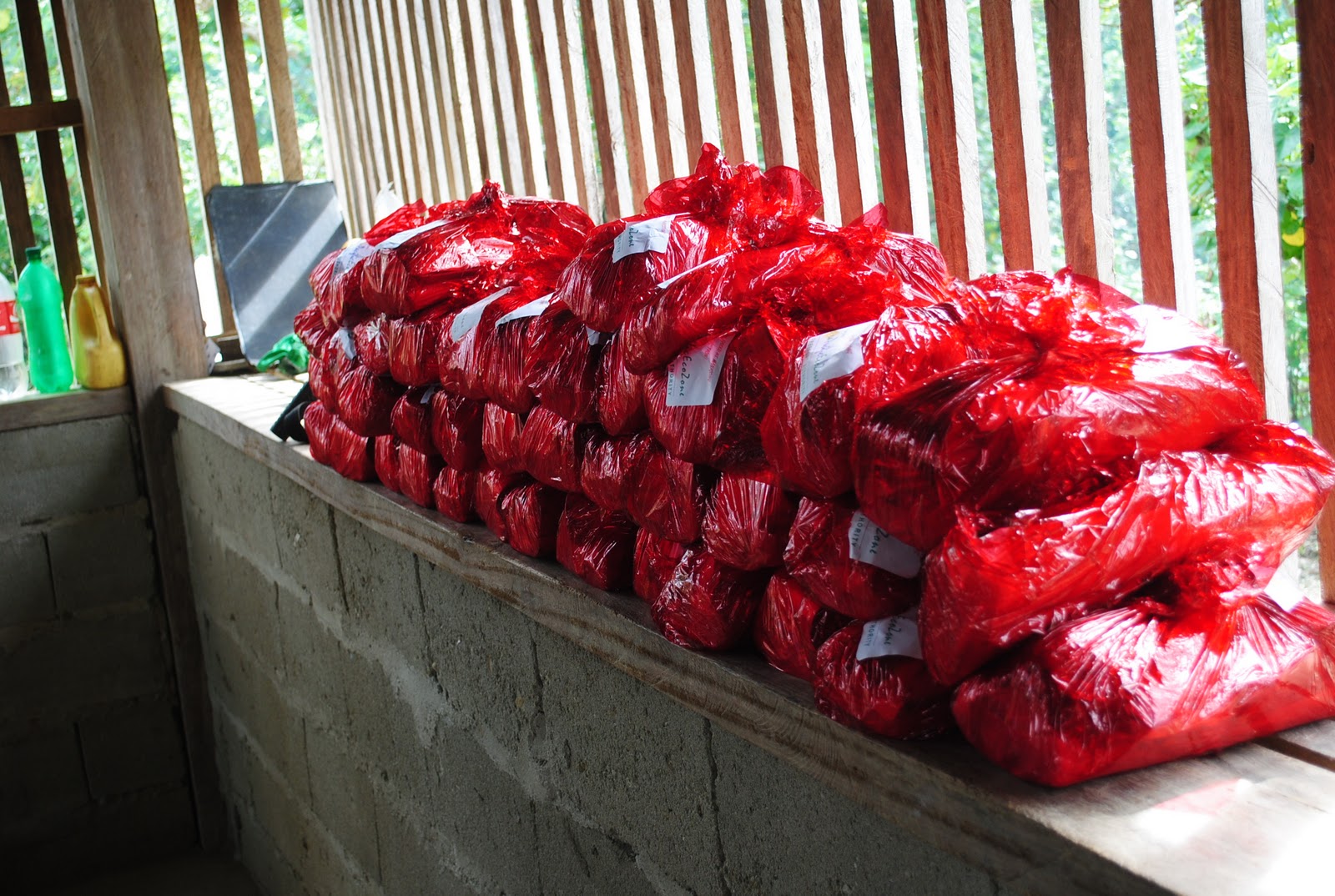
CASIGURAN, AURORA------This Christmas season, APECO Staff from Makati and Casiguran teamed up to give gifts for our fellow Casiguranins. Eight-hundred fifty pack of goods are given to the five barangays of Aurora.


MORE GIFT GIVING PICTURES! 


The gift giving was done in two days for the five barangays and almost 750 families. Merry Christmas! 

Tuesday, November 8, 2011

Dumagat leaders: Apeco will protect ancestral lands


CASIGURAN, Aurora -- The Aurora Pacific Economic Zone and Freeport Authority (APECO) reiterated its pledge to protect the ancestral domain of the Dumagats in North Eastern Luzon.

Robbie Mathay, CEO and president of Apeco, said Apeco would help the Dumagats protect and preserve their ancestral lands through projects that promote eco-tourism.

In the next few years, APECO sees tourism activities in Casiguran managed by the Bantay-Gubat from the indigenous Dumagat community.

Bantay-Gubat is a Department of Environment and Natural Resources (DENR) project that hires emergency forest extension workers that would act as forest guards. They have the following duties: patrolling, monitoring for any sign of forest fire, seed collection, information gathering about ongoing activities, and assisting in information dissemination.

Dumagat leaders underscored the importance of cooperating with Apeco, coming in full support during the budget hearing in Senate last month. “We won’t accept money from Apeco,” said Conchita Descarga, Community Relations Officer of the Dumagats.

“We don’t need money, we need land. With regards to ancestral domain, Apeco knows our lands and they respect that it is ours,” she added, disputing claims of land grabbing.